
The ability to smell provides many advantages. In addition to driving joy from pleasant fragrances, it adds multiple layers to any meals consumed. The taste buds along the tongue provide information on the food’s basic tastes, but to experience the nuanced layers of a flavor requires smell. Think of it as the extra shades between every color in the rainbow.
A healthy sense of smell does more than help us savor a good meal; it serves as an early warning system. The sharp, sulfur-like odor added to natural gas, for example, can alert us to a leak before we ever see a sign of danger, giving us time to fix the issue or vacate the area safely.
Those who do not enjoy the full benefits of their sense of smell are not without hope, however, as research points to smell training as a valid way of repairing that lost sense. Persistent anosmia— an inability to smell that does not ease over time — may be countered with a type of odor therapy, research has shown.
How Humans Smell: Structure and Process
Approximately 1,000 genes code for olfactory receptors, a discovery brought to light in 1991by Linda Buck of the Fred Hutchinson Cancer Research Center and fellow laureate Richard Axel of the Howard Hughes Medical Institute.
Much of what we understand about smell stems from the pioneering work of Buck and Axel, later reinforced by studies on fruit flies that mapped which specific receptors respond to particular odors. In humans, their discoveries laid the scientific foundation for our modern understanding of how odor molecules are detected and translated into the experience of scent. Like other senses such as touch and sight, smelling involves interacting with the particular subject — in this case, an odor — and having it be processed by receptors and the brain.
When you inhale a scent, microscopic odor molecules travel into the nasal cavity and dissolve in a thin layer of mucus. There, in a small patch of tissue called the olfactory mucosa, specialized receptor neurons extend tiny projections that bind to those molecules. This interaction marks the first step in the olfactory pathway, converting a chemical signal in the air into a neural message the brain can recognize as smell.
With those scented molecules inside the nose, their presence stimulates or inhibits different receptors, which fire off a signal to the olfactory bulb, an area just under the brain. It is the olfactory bulb that tells the brain the nature of the odor that was inhaled. That scent may be one of the 10,000 smells that humans are capable of interpreting.
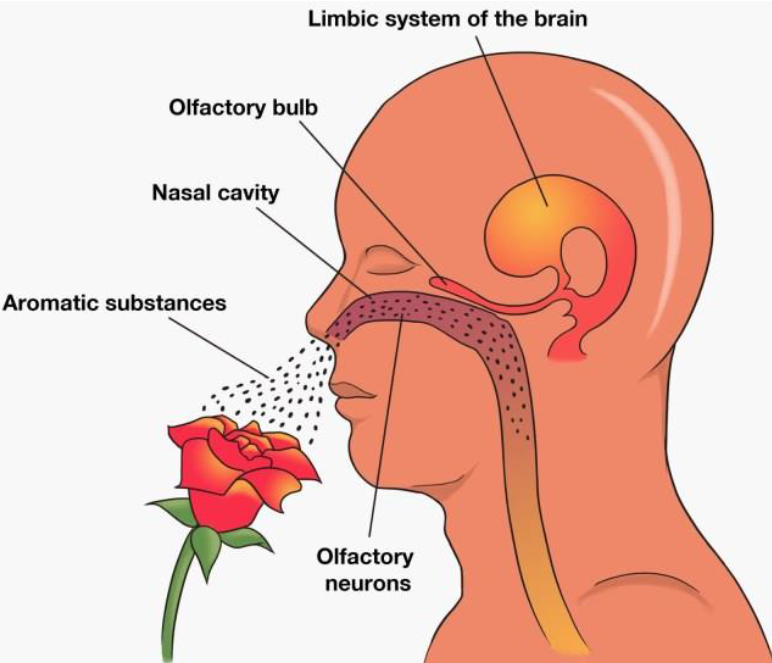
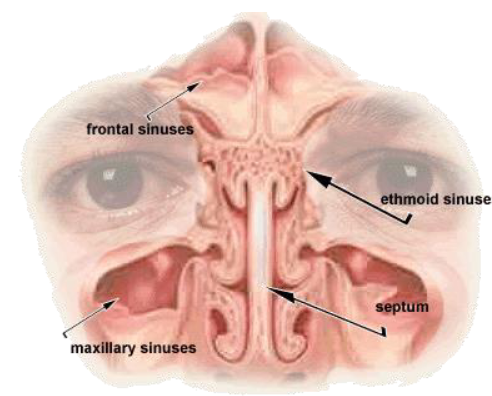
From the outside, the nose looks simple enough — two nostrils and a bridge — but inside, it is a surprisingly intricate system. The interior contains open chambers called nasal cavities and curved, scroll-like structures known as turbinates that increase surface area and regulate airflow. Each part plays a distinct role in keeping the nose working at its best.
The sinuses produce mucus that traps dust, pollen, and other airborne particles while keeping the nasal passages moist. They also help lighten the weight of the skull and contribute to the resonance of the human voice. The turbinates provide additional filtering while warming and humidifying incoming air — because no one appreciates the dry, uncomfortable sting of a cold, stiff nasal passage.
Loss of Smell
Airborne particles or trauma can disrupt the functionality and structure of the inner nose, and thus debilitate the sense of smell. Deviated septums are common afflictions to varying degrees. Almost everyone has a very slightly uneven septum, which occurs when the area separating the left and right nostrils is not right in the middle, favoring one side or the other. For those with light versions of this, the most this would mean is brief moments of uneven breathing through the nose in the morning, when noses function at their worst.
But more extreme cases exist in plentiful numbers and cause plentiful damage, including severely impairing or completely preventing the ability to smell odors. This is due to the obstruction of airflow, preventing scented particles from reaching the olfactory bulb for processing. Deviated septums can be the result of trauma to the nose at any point in life, or they can be a trait at birth from improper development.
Prolonged congestion and blockage by masses in the nose prevent proper smelling as well. Nasal polyps are noncancerous masses within the nose and sinuses that inhibit airflow. They can occur naturally or as a result of sinus infections, allergic rhinitis (hay fever), sinusitis, chronic infections, and even cystic fibrosis. Sometimes the exact reason can be difficult to pinpoint, but the end result can include the inability to smell.
Certain medications also contribute to not being able to smell, as can inhaling harmful odors. In short, a person’s sense of smell is rather vulnerable.
Researching a Resolution
There are many causes of persistent anosmia and anosmia itself exists on a spectrum. But a prolonged inability to smell anything presents unique hurdles when navigating ways to amend it. These challenges drove researchers to find out how to help those with anosmia.
Much like the sense of sight, the sense of smell requires a learning curve. Radically new corrective glasses take time to fully help the eyes see their best; the eyes and brain need to “learn” this new skill the lenses have given them: sight. Such is the case with prolonged anosmia.
A 2009 study by Professor Thomas Hummel observed the effects of short-term, repeated exposure to different odors on those with anosmia. A major area of interest for Professor Hummel, who also runs the Smell and Taste Clinic at the University of Dresden, was the parallels between scent and taste. Foods are actually grouped into categories of taste: sweet, salty, sour, bitter, and umami. These five categories cover the flavors experienced when we taste different foods.
Professor Hummel wondered if the same can be said with scents. His ultimate results led him to categorize scents into four types: flowery, fruity, spicy, and resinous. He felt any odor inhaled could fall under one of these four groups, making them key in the development of olfactory rehabilitation. Using this knowledge, he compared two groups of individuals with anosmia; one group was given carefully selected essential oils to sniff at scheduled times across 12 weeks, while the second group did not smell the oils.
30% of the test group experienced improved abilities to smell that had previously been nonexistent. This included individuals whose anosmia was caused by a variety of sources, from head trauma to respiratory infection. Professor Hummel’s work became the basis for further research still, including a 2015 study at the Istanbul Surgery Hospital, which found that further improvements could be made if individuals followed the regimen beyond 12 weeks.
The Smell Training Regimen
To represent each of the four main fragrance types, Hummel’s study utilized four essential oils for participants to sniff. They were:
- Rose for flowery
- Lemon for fruity
- Cloves for spicy
- Eucalyptus for resinous
Thus, to replicate smell training, it is advised that participants use small jars of these essential oils. Those hoping to heal their depleted sense of smell would hold the opening of each jar near their nose one at a time, and breathe in. That inhale should be normal and not exaggerated; when the nose is cleared (sinuses drained, deviated septum straightened, etc.) odor molecules will find their way to the olfactory lobe, and even if the passage is not completely clear, exaggerated breaths will not yield any benefits, only dizziness.

Each fragrance should be revisited several times, with about five minutes of rest between sessions. As Professor Hummel and the follow-up 2015 study demonstrated, repetition plays a crucial role in strengthening olfactory recovery. We do not abandon a new pair of glasses simply because our eyes need time to adjust; in much the same way, the nose and its olfactory neurons require steady, consistent exposure to recalibrate and recover. Providing that structured practice — returning to core scents at regular, scheduled intervals over several weeks — gives the system the stimulation it needs to improve.
Training the nose in such a way is actually similar to the training expert perfumers undergo; a university in France is renowned for the rigorous training its pupils endure to become masters of fragrance.
If there is ever the worrying realization that the sense of smell is not what it used to be — or should be, if it was never really there — methods exist to build it up and heal it, just like muscles. Conquering this opens up a whole new world of sensations — and opens up the nose to some delightful scents.






 Daly Wordcraft
Leave a reply to The Mindful Migraine Blog Cancel reply