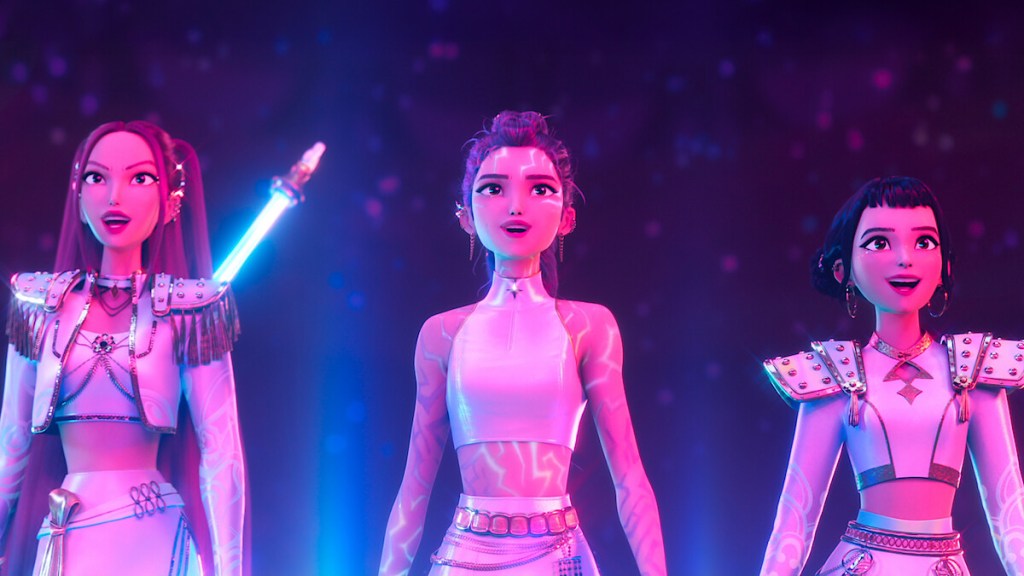
From its earliest moments, KPop Demon Hunters establishes a clear and compelling idea: the Honmoon is powered by “songs of courage and hope.” This is not presented as a metaphor alone, but as a mechanical truth within the world. The Hunters do not just perform any song to generate power against the demons; they must be generating uplifting messages to listeners. To fans. Their voices are meant to confront demons that embody shame, fear, and self-rejection, countering these forces with love, pride, acceptance, and willingness to grow. Strength, as the series initially defines it, is not rooted in flawlessness, but in emotional honesty.
And yet, as the story unfolds, the Hunters drift away from that original understanding.
What begins as a philosophy of courage gradually becomes a pursuit of perfection. Somewhere along the way, the meaning of the Honmoon is reinterpreted—not through malice, but through fear. At the center of this shift is Celine, whose teachings reshape the Hunters’ approach in subtle but significant ways. Her insistence that “our faults and fears must never be seen” introduces a new framework: that strength lies in concealment, that weakness must be hidden, that the self must be refined before it can be expressed.
“Our faults and fears must never be seen.” —Celine
It is a compelling idea. It is also a destructive one that goes completely against how the Honmoon was supposed to be powered. How can anyone feel courageous when they are taught to hide away in shame and fear? How can anyone feel hopeful when they are taught to resent themselves and embrace denial?
If the Honmoon is fueled by courage and hope, then those qualities must exist in their full form. The songs must be messages reflecting these values and the Hunters should live under the same tenets. Courage requires fear. Hope requires vulnerability. To erase those elements is not to strengthen them, but to hollow them out. In encouraging the Hunters to suppress their imperfections, Celine does not make them stronger—she removes the very conditions that allow their power to exist at all.
This distortion becomes most visible in “Golden.” On the surface, the song appears to align with the Honmoon’s purpose. It carries optimism, forward movement, a sense of rising above. But what it lacks is just as important as what it contains. “Golden” offers hope, but not courage—the kind of courage that comes from acknowledging one’s flaws and choosing to stand anyway. Instead, it presents a version of the self that is already resolved, already polished, already acceptable.
It is aspirational. It is incomplete. As a result, it fails.
The Honmoon does not respond—not fully—because it is not being fed what it was designed to receive.
The Hunters, despite their talent and discipline, find themselves unable to turn it golden, unable to fully defeat the demons they face. This failure is the natural consequence of a philosophy that contradicts the system it is meant to support.
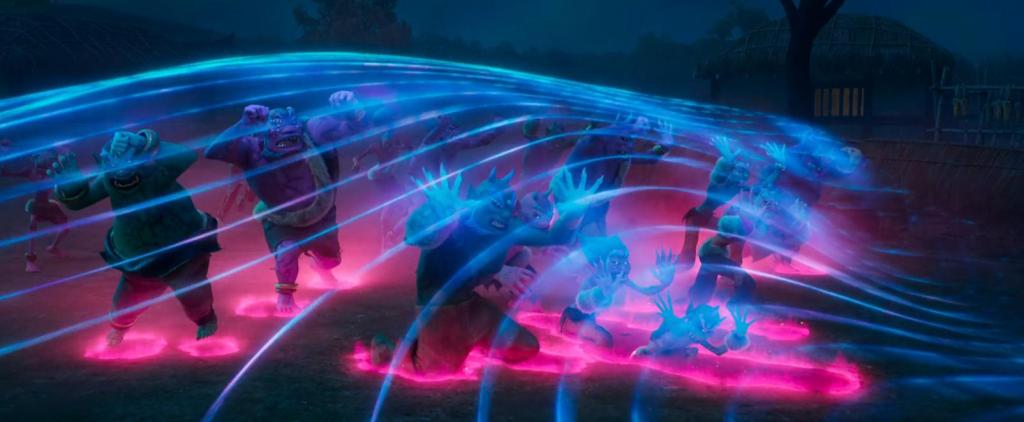
The irony is difficult to ignore—and extremely costly. The Hunters are tasked with fighting manifestations of shame and self-hate, yet they internalize those same forces by hiding their own perceived flaws. In doing so, they nurture the very demons they are meant to destroy. The conflict becomes cyclical, sustained not by external opposition, but by internal misalignment.
What appears at first to be a story about power is, in truth, a story about misunderstanding it.
Let’s posit a few questions. Why didn’t “How It’s Done” create the fabled golden Honmoon? What about “Golden,” the ballad pushed by Huntrix as the song that will seal demons from the world forever? In reality, “Golden” has won the 2026 Academy Award for Best Original Song, the 2026 Golden Globe for Best Original Song, and the 2026 Grammy for Best Song Written for Visual Media. But in Kpop Demon Hunters, “Golden” was not what created a Honmoon of unprecedented power. That means none of those were songs of courage and hope. Huntrix does not compose a song featuring the ultimate display of courage and hope until the very end of the film.
“What It Sounds Like” marks the moment that misunderstanding is finally corrected. Unlike the performances that come before it, the song does not strive for perfection. It does not attempt to smooth over contradiction or present an idealized self. Instead, it embraces complexity. It allows vulnerability to exist openly, without apology.
And in doing so, it succeeds where everything else has failed.
The Honmoon responds—not because the Hunters have become stronger, but because they have become honest. They truly embodied the values that were meant to fuel a true, all-powerful Honmoon. Courage, in this moment, is no longer a false idol to be smothered with shame. It is expressed through acceptance. Hope is no longer projected outward as an image of what could be, but grounded in what already is. What always has been.
The shift is subtle in form, but profound in meaning.
What “What It Sounds Like” reveals is not a new power, but the original one—the version of the Honmoon that was described from the very beginning. The Hunters were never meant to achieve perfection. They were meant to embrace themselves fully, to transform vulnerability into strength rather than erase it. The goal was never to become flawless. It was to become whole.
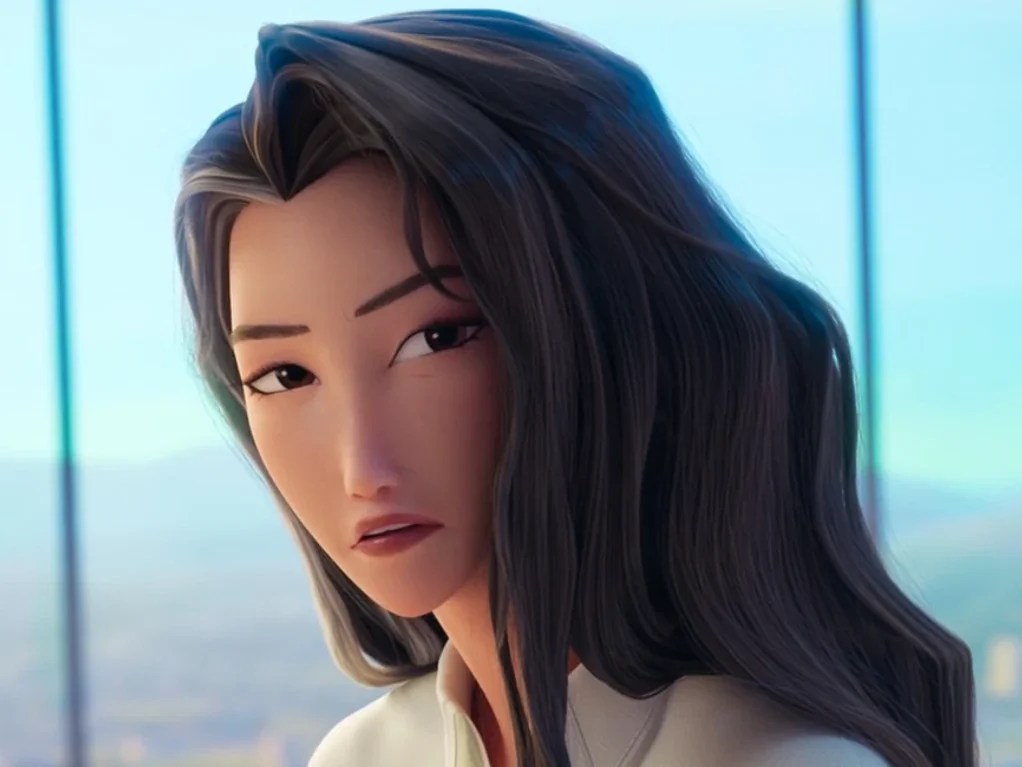
Seen in this light, Celine’s role becomes more complex. She is not an antagonist, nor an intentional saboteur. Her guidance is rooted in a desire to protect, to prepare, to strengthen. But in redefining strength as the absence of flaw, she unintentionally redirects the Hunters away from their foundation. Her teachings do not oppose the Honmoon outright—they distort it, just enough to prevent it from ever fully working.
In that sense, she becomes an unwitting obstacle, not through opposition, but through misinterpretation.
The resolution of the story, then, is not about surpassing her teachings, but about correcting them. The Hunters do not reject her entirely; they outgrow the limitations of her philosophy. They return to the original vision—one that allows fear and courage, doubt and hope, to exist together.
And when they do, everything aligns.
The Honmoon shines, not because it has been perfected, but because it has finally been understood.
What KPop Demon Hunters ultimately suggests is both simple and difficult: that strength is not found in hiding who we are, but in revealing it. That courage is not the absence of fear, but the willingness to be seen despite it. And that hope, at its most powerful, begins with acceptance.
The Hunters did not gain new power in the end.
They remembered the power they had all along.






 Daly Wordcraft
Leave a comment