A pandemic of this scale has not been seen in nearly a century. This traumatic, global event took decades to emerge, yet it took no time at all for studies to begin examining the mental health ramifications caused by the spread of COVID-19. Many agree that, regardless of circumstance, nearly everyone has been mentally impacted in some way. Healthcare workers face the strain of working on the frontlines. Civilians staying home worry about their livelihoods. Essential workers navigate entirely new systems with unfamiliar challenges. All the while, humanity endures isolation out of necessity.
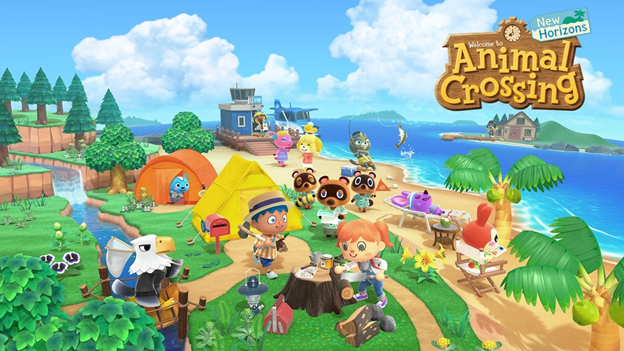
As the world fell further under the grip of the coronavirus pandemic, one date arrived with either quiet passage or great anticipation, depending on the person. March 20, 2020 marked the release of Nintendo’s highly anticipated Animal Crossing: New Horizons. First announced in September 2018, the game had years to build excitement among fans.
And ultimately, after a notable delay, New Horizons arrived at precisely the moment it was needed most.
At a surface level, New Horizons offers a rich and relaxing break from the monotony of quarantine life. New mechanics refresh the experience for longtime players while maintaining an inviting simplicity for newcomers. But beneath that surface lies something more meaningful. Years of psychological research help explain not only why people turn to video games, but why New Horizons in particular became so vital during this moment of global uncertainty.
The self-determination theory, introduced by Edward Deci and Richard Ryan, proposes that people are most motivated when three fundamental psychological needs are met: competence, autonomy, and relatedness. Ryan later expanded on this in The Motivational Pull of Video Games: A Self-Determination Theory Approach (2006), which helped establish why games are so compelling.
These three needs are not abstract concepts — they are essential to human well-being. And Animal Crossing: New Horizons fulfills them in abundance. It offers a steady source of psychological reinforcement at a time when such fulfillment is otherwise scarce. For anyone wondering why people play — not just in general, but why New Horizons resonated so deeply — there is a clear and grounded explanation.
Quarantine. Lockdown. Social distancing. Cancellation. These terms quickly became part of daily life. Anxiety rose alongside case counts, first abroad and then closer to home. If the original definition of an apocalypse is the end of life as we know it, then this moment certainly approached that threshold.
Living through such disruption — a break from routine, stability, and familiarity — carries significant mental health consequences. A Kaiser Family Foundation poll found that 56% of Americans identified the pandemic as a major source of stress, with many reporting a direct negative impact on their mental health.
People already sought breaks from unpleasantness in video games, even without the pandemic. They did so to gain a sense of competence, which video games strategically administer to keep players playing. Some keep things simple, like the tame Yoshi’s Crafted World. Others have higher risks coupled with a learning curve like Uncharted with different difficulty settings. And others still lean into making players literally fight for that sense of competence and triumph, seen in titles like Bloodborne.
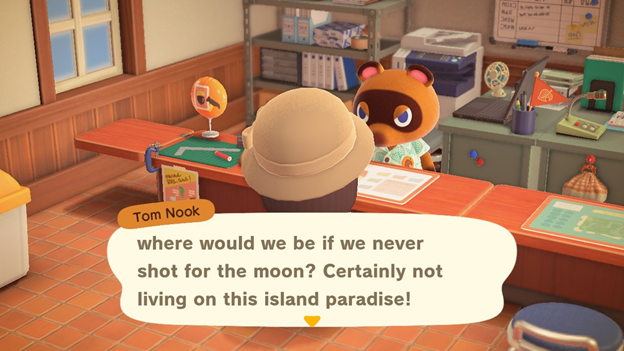
But among all these different approaches, Animal Crossing: New Horizons stands out as unique. And there’s a reason why players are leaning into this title with such fervor unseen with others these days. It’s because of the simple, real nature of its reward system. Veterans and newcomers alike can quickly see what this title is about: you settle in a quaint, simple land, and build up your home — and island — however you want, exactly as you want. Along the way, you get some goals assigned by characters to fulfill our fundamental need for a sense of competence. Tom Nook tells you how to get a museum for your new island, so now you have the task of finding critters to donate. With its simple controls and navigation, Animal Crossing allows players to easily accomplish these tasks and derive a sense of victory — competence — with each play session.
The newfound, enhanced freedom of New Horizons carefully keep the competence feedback loop churning, though, in ways not seen in other games both in the franchise and out. New Horizons demands players tap into their sense of creativity and desire. Anything they wanted to make a reality in their towns can now be that way. Things don’t happen overnight (well, they do, but after many days of saving up bells), so players then create their own goals when characters do not. An aspiring designer wants to landscape their house with impressive water features? Then they’ll need to earn the terraforming permit, arrange the area how they want, save materials and money to build a fountain, and personally realize their creation.
New Horizons brings this reward system to all new heights and in a way society desperately needs as all our other methods of self-realization shut down around us. Many dreams have been postponed. Simple desires can’t be met safely or traditionally. In place of basic and grand wish fulfillments, Animal Crossing: New Horizons has filled in the gaps both with its usual promises and all new ones. In regards to the latter, it has also tapped into people’s psychological need for autonomy.
Personal freedoms, control, power over a situation, seemed inherent each day before COVID-19. There’s a reason people have fought tooth and nail for their rights to self-determination, liberation, expression, and more. Autonomy is a fundamental psychological need. But when real life can’t meet the quota, people turn to games. And real life really can’t meet the quota these days. At the basic level, people lost the freedom to travel and go about life as they normally would. Restrictions run rampant to flatten the curve and keep everyone healthy. On a deeper level, people do not feel in control of life as a whole sailing through these turbulent waters. Incomes have been impacted, job routines transformed, and health jeopardized. Humanity is facing a drought in autonomy.
Enter Animal Crossing: New Horizons, with all new ways of feeling like a lord overseeing the development of his lands. The rivers literally flow where the player says they flow. Entire buildings will lift up and get plopped down somewhere else with the push of a few buttons. Signs can depict whatever the player wants. Shopping is restricted only by closing hours at night; otherwise, the MC can stand right next to the Able sisters or Nooklings without counting out six feet and wearing a mask. New Horizons fills in that void of autonomy, power, control, and security.
While even major open-world titles like The Witcher 3: Wild Hunt, which saw a massive spike in sales since the Netflix adaption, offer freedom, it’s not the same brand of balm offered by Nintendo’s latest hit. No, New Horizons hits at a different spot, in a quainter place. And that different flavor makes it precisely what the world needs.
Fantastical open-world games have to take you somewhere unfamiliar and make you someone else entirely to recover your freedom. To feel free in The Witcher 3, you have to be Geralt of Rivia, a hardened monster hunter ostracized for undergoing changes to better fight the bad guys. In New Horizons, the story is entirely yours. You make yourself who you want to be. Players can recreate themselves in the MC’s appearance or project and let the MC be who they wish themselves to be. It grants a level of personal control not present even in a pre-coronavirus world and downright missing in action this year.
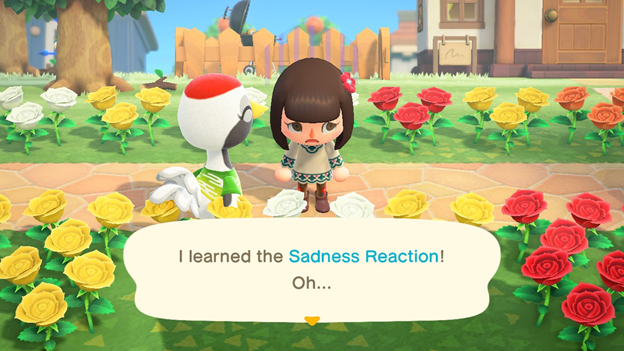
Perhaps one of the most unprecedented appeals in the new Animal Crossing, and the hardest hit psychological need, is that of relatedness or connection. Producer Hisashi Nogami told CNET, “I think Animal Crossing falls under the genre ‘communication game.’” To make it into such a game, it was designed for each system to have one save file for many people. Eventually, online play expanded the community further.
Today, both in this era of remote communication and in the contact-deficient coronavirus era, the Animal Crossing community has expanded exponentially. Couples visit one another, date, and even throw weddings. Friends visit one another, not only to get up to light-hearted mischief as a form of escapism but simply for the miraculous activity of simply being together.
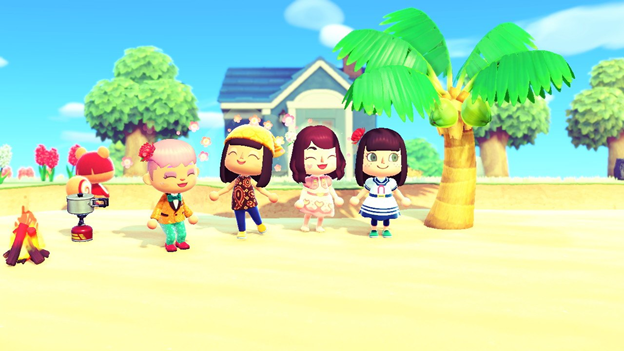
Newfound methods and mechanisms of autonomy have given the Animal Crossing community new ways of interacting, building bridges in an already interconnected bubble that stretches across hemispheres and continents. In an age where people cannot facilitate business as usual, those seeking a vital sense of competence in their quest for a perfect island exercise their autonomy and engage in relatedness or connection with a sprawling online community of friends and strangers. If life within the four walls of lockdown is mundane and unrewarding, unpredictable and unwelcoming, the reliable, malleable pastel whimsy of Animal Crossing: New Horizons is COVID-19’s complete foil.
And while maintaining these lines of connection, it enables people to have a significant impact on others they’d be unable to reach out to while in quarantine. Everyone has their own island, but New Horizons has become a collective effort where everyone helps everyone get that perfect item, learn that great DIY recipe, welcome that beloved villager. In an age when we must stay apart, Animal Crossing: New Horizons safely defies that in an immersive, powerful way. It is a vehicle to obtain that which COVID-19 robbed.
At all our cores, each of us are motivated by three psychological needs: competence, autonomy, and relatedness or connection. Even before the coronavirus, many people’s regular lives faced a deficit of these necessities in thrilling enough amounts that people turned to video games. Careful doses of triumph from solving puzzles made Portal a great supplier in a daily dose of big victories when regular life might provide so few. COVID-19 cut off all other major ways of achieving this sense of competence humans need. It also targeted our sense of control at multiple levels. We don’t have the freedom to conduct our days entirely as we want. But we do have the power to choose how to attack an enemy camp in Legend of Zelda: Breath of the Wild. But we must do this alone, as we must also face the pandemic alone, lest we risk infecting others. MMORPGs allow players to meet others and help their cohorts find success while following the rules of the game.
But one game provides all of this and more in a remarkable trinity of balance that came out just when the world needs it most. When everyone is facing such a crippling, unprecedented deficit of three essential psychological needs that drive self-determination and betterment, Animal Crossing: New Horizons is a palatial oasis bestowing continuous rewards enabled by reliable control and reassuring connection. We all have basic reasons why we play: for fun, for bringing ideas to life. But psychologically, biologically, New Horizons is fulfilling needs that have been devastated by the COVID-19 pandemic. Scientifically, we cannot help but play this game.


 Daly Wordcraft
Leave a comment